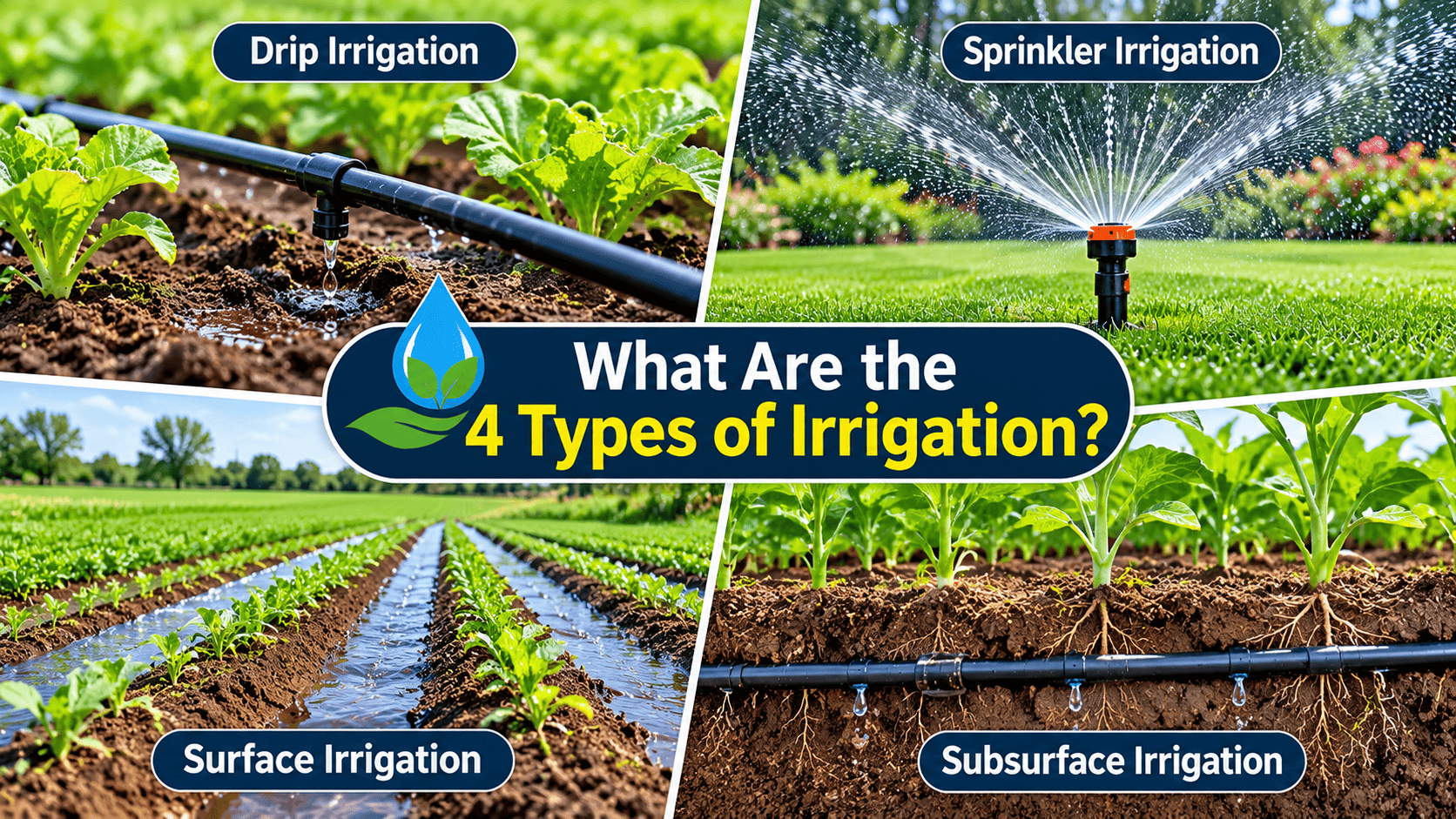
What are the 4 types of irrigation? The key irrigation system types include drip irrigation, sprinkler irrigation, surface irrigation, and subsurface irrigation. Each method offers unique advantages, depending on water availability, land shape, and crop type. Surface irrigation is low cost, drip saves water, sprinkler ensures even spread, and subsurface prevents evaporation. Efficient landscape irrigation conserves water, lowers energy bills, reduces weed growth and diseases, and promotes robust plant growth.
Drip or Trickle Irrigation
A drip irrigation system delivers water drops directly to plant roots and cuts waste by up to 70%. Water moves slowly through the system and reaches the base of the system via a network of plastic tubes and emitters. Highly localized delivery operates at a very low pressure with minimal surface wetness.
- According to the EPA, we can all use at least 20% less water by installing water-efficient fixtures and appliances.
Types
- Surface drip lines with individual point emitters
- Inline drip tubing (soaker lines) for closely spaced row crops.
Benefits
- Maximize water conservation
- Prevents weed growth between rows
- Enables precise liquid fertilizer delivery (fertigation).
| More than half of all US states rely on sprinkler irrigation for the majority of their irrigated acreage. Gravity irrigation is the most dominant method in 9 states, including desert states like Arizona and Nevada. |
Sprinkler Irrigation
Water is forced through pipes under pressure and sprayed into the air through nozzles to mimic natural rainfall. It features overhead distribution covering large uniform areas and is adaptable to rolling or uneven land topography.
- A household with an unmaintained automatic irrigation system can waste up to 35,000 gallons of water annually.
Types
- Fixed head rotary sprinklers
- Center pivot and lateral move mechanized systems
- Portable hose end sprinklers
Benefits
- Even water coverage
- Easily automated with electric timers
- Helps wash dust off foliage
- Distributes soluble fertilizers
| California is the only state where both drip and gravity irrigation are used more widely than sprinklers. |
Surface or Gravity Irrigation
Water moves across the soil surface by gravity flow, spreading naturally from higher to lower elevations. This system requires no complex machinery or high-pressure pumps and relies completely on land slope and gravity.
Types
- Basin irrigation (flat plots enclosed by small dikes).
- Furrow irrigation (small parallel channels between crop rows)
- Border irrigation (sloped rectangular strips divided by ridges)
Benefits
- Very low initial setup costs
- Low energy required
- Easy to operate on large flat fields
Subsurface Irrigation
It features completely hidden infrastructure and relies on capillary upward movement of moisture into soil.
Water is applied below the ground surface directly into the root zone via buried, perforated drip tape or by raising the natural water table.
Types
- Buried drip irrigation lines
- Controlled subirrigation via underground ditch and drainage networks
Benefits
- Eliminates water loss from surface evaporation
- Keeps the topsoil dry to minimize weeds and fungal plant diseases
- Allows unhindered surface farm traffic
| Across the US, irrigation is more heavily concentrated in the Southwest and decreases as one travels northeast toward Maine. Top irrigation methods by states: Drip trickle 3 statesGravity/Flood 9 states Sprinkler 36 states |
Conclusion
The four main types of irrigation, drip, sprinklers, surface, and subsurface, help give water to landscaping and crops in different ways, depending on soil, crop type, and water supply. Efficient landscaping irrigation delivers precise moisture directly to root zones, minimizes surface runoff, and saves hours of manual labor.
Hill Country Dirt Works LLC keeps your yards consistently green and boosts overall curb appeal. Focusing on water conservation and even coverage, we design and install efficient irrigation systems, tailored to your property’s specific needs.
FAQs
Which irrigation type is the best?
There is no single best type, but drip irrigation is the most water-efficient (90-95%) because it sends water straight to plant roots. The right type depends on your soil type, crop, or budget.
Why use subsurface irrigation?
Subsurface irrigation allows water to move underground below the roots. It controls the water table from below and stops water loss from the sun drying it up.
How long do irrigation systems last?
Most residential irrigation systems last between 15-20 years as a network, though individual parts wear out sooner. Sprinkler heads last 3-10 years, valves and diaphragms 8-15 years, while underground PVC pipes can last 20-40+ years.